
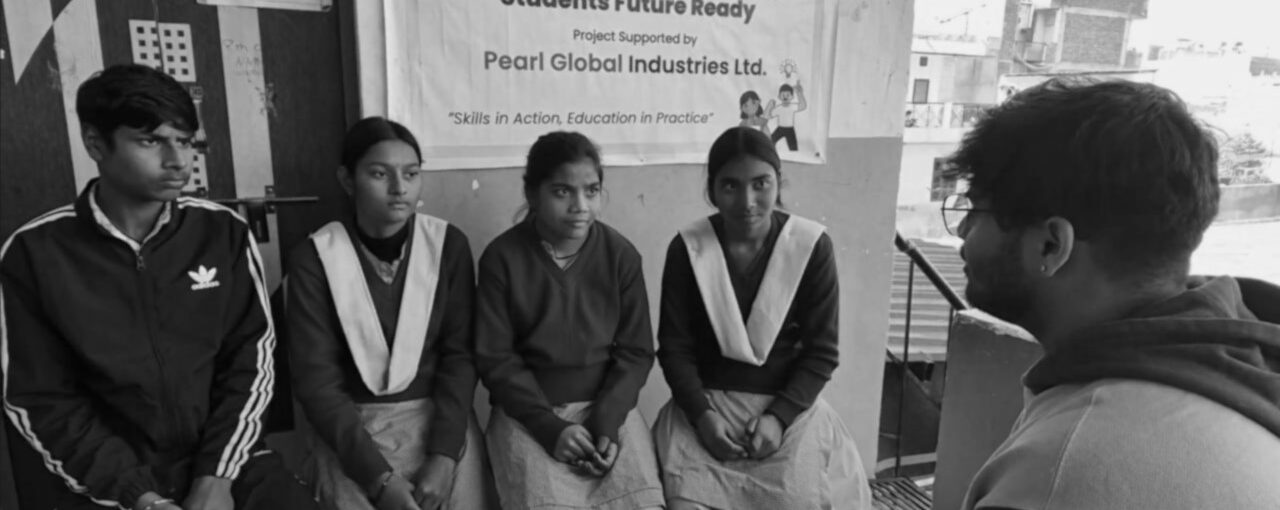
My recent visit to ETASHA’s center made me wonder, why haven’t government schools, or even many private schools, adopted such methods which this organisation being an NGO has taken so effectively? Why do schools still rely so heavily on traditional, textbook-based teaching when more engaging approaches clearly work?
Today, I visited one of the operational centres of ETASHA Society which runs its ‘Badhte Kadam’ project, focused on skilling adolescents from the Gurugram community. Most students, aged between 12 to 16, are enrolled in government schools and come to the centre for remedial learning or what they call ‘Tuition’. They seek to bridge academic gaps, keep pace with school curriculum and strengthen both their academic performance and personal development. The program is offered free of cost, ensuring equitable access for all learners.But what truly stood out was not just accessibility; it was joy. These children genuinely enjoy coming here to learn.
The centre also offers computer education, something many government schools still struggle to provide due to a lack of infrastructure. But beyond facilities, what really intrigued me and made me pause was their teaching methodology. For instance, while teaching Hindi, the facilitator used an activity-based learning approach. Each student came up to the board and wrote a word that started with the letter the previous word ended with. It was simple, interactive, and effective. Similarly, in mathematics, concepts were taught using practical, real-life examples instead of rote problem-solving. These methods not only helped students understand concepts better but, more importantly, motivated them to come regularly and stay engaged. This experience brought a pivotal shift in my thinking.
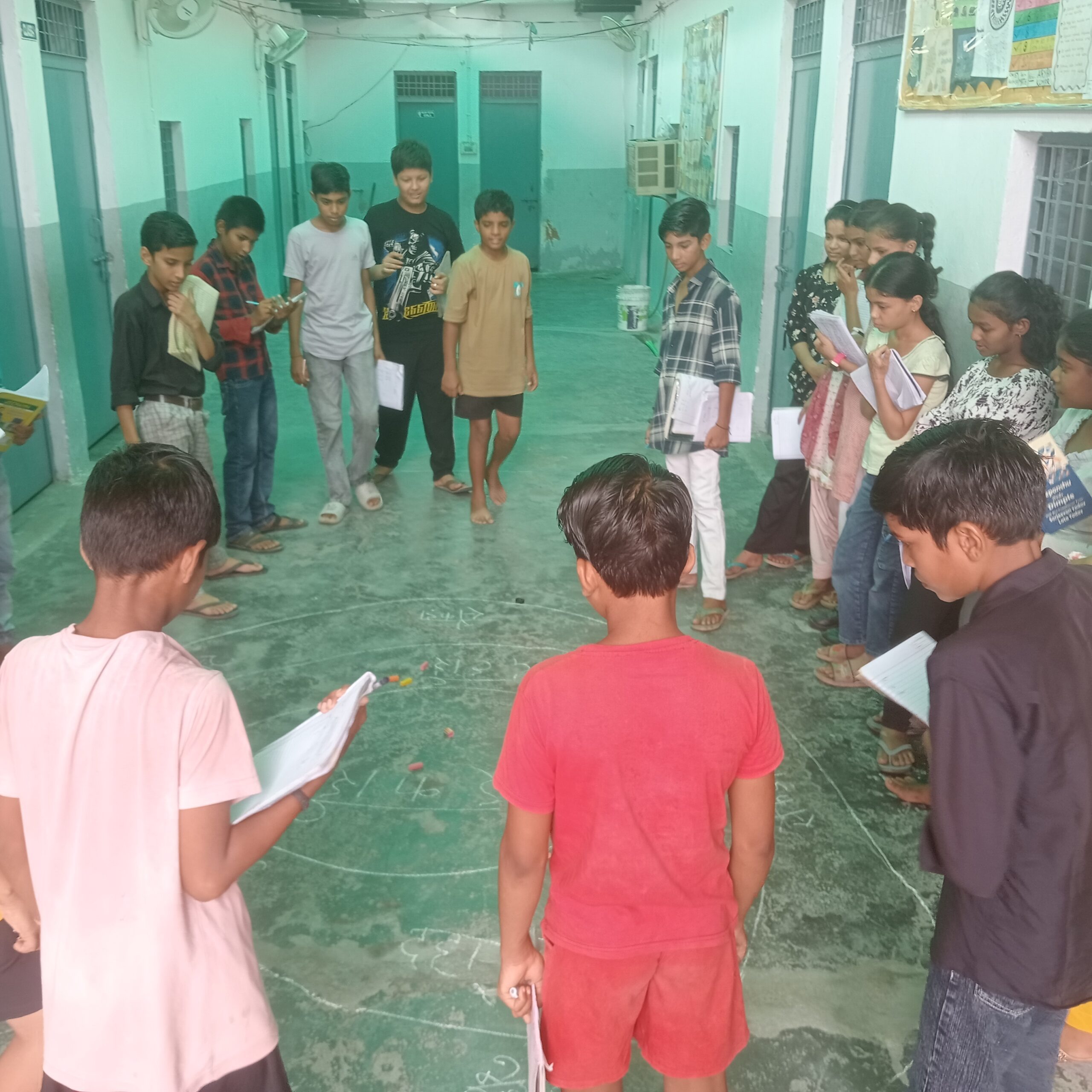
It made me question our education system deeply. Students often avoid going to government schools, yet they are excited to learn at an NGO like ETASHA. Isn’t that something we need to reflect on? Is the problem really just about a lack of resources? Or does our education system urgently need a change in approach?
To better understand this, I asked one of the facilitators at ETASHA how they manage to create such a visible impact despite facing similar constraints, such as one teacher handling 50–60 students, limited resources, and diverse learning needs.
Her response stayed with me, “Agar aapka dil NGO waala nahi hai, toh aap sirf ek teacher hi reh jaate ho.” What she meant was simple yet powerful. If the intention is not rooted in genuine concern for students’ growth and future, one cannot go the extra mile. And that intention, that ownership, was something I could clearly see at ETASHA.
My takeaway from this visit was overwhelming, but also deeply concerning. If an NGO with limited resources can innovate, engage, and inspire students to learn, then why are our government schools still struggling to do the same? Perhaps what we need is not just better infrastructure, but more intent-driven educators and more organisations like ETASHA, who place learning, curiosity, and skill development at the heart of education. This visit left me with hope but also with an urgent question for our education system to answer.
This blog is written by Mudit Bagla, 1st Year MBA student, NMIMS Bengaluru.