
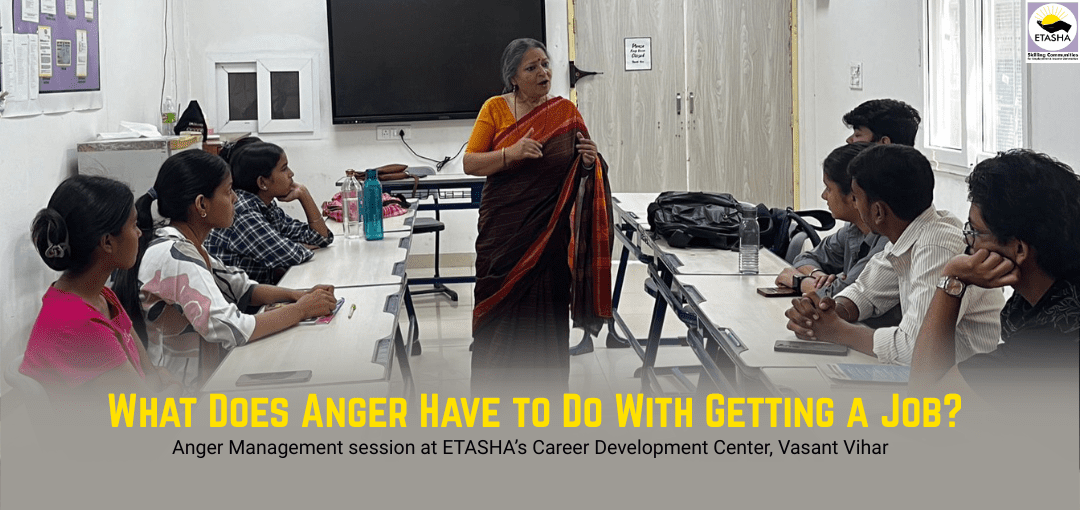
Getting a job is not just about skills on paper. It is about showing up! Calm, focused, and ready to work with others.
India has the world’s largest youth population, with over 600 million people under the age of 25 and still employability remains one of the country’s most stubborn challenges. Skill gaps are part of the story, but emotional readiness rarely makes the headlines. For millions of young people, especially those growing up in environments full of stress, conflict and everyday poverty, showing up in that calm, composed way is far easier said than done.
They are determined, and full of potential. But many of them carry invisible weight into every interview room and every first day at work weight that nobody taught them how to put down.
Anger Management Is Not What You Think It Is
Anger management is not about suppressing feelings, pretending nothing is wrong, or becoming emotionless. Anger is a completely normal human emotion. Everyone feels it and in many situations, it is entirely justified.
Anger Isn't the Problem. Not Knowing What to Do With It Is.
Anger management is about learning to recognise, understand, and respond to anger in ways that do not harm you or the people around you. It is the difference between reacting and responding.
Research tells us that 85% of job success comes down to soft skills like emotional regulation and communication, while only 15% is attributable to technical knowledge alone. You can be the most technically capable person in the room, but if you lose your temper when a manager gives feedback, or shut down when a colleague disagrees, opportunities will pass you by. Employers are watching how you handle pressure just as closely as they are watching what you know.
When Your Environment Has Never Modelled Calm, How Are You Supposed to Know It?
Emotional regulation is a skill often taken for granted. In many middle-class and privileged settings, children grow up around adults who talk openly about feelings and resolve conflict through conversation. Without even realising it, those children absorb these patterns and carry them into adulthood.
The real scenario from the low-income communities
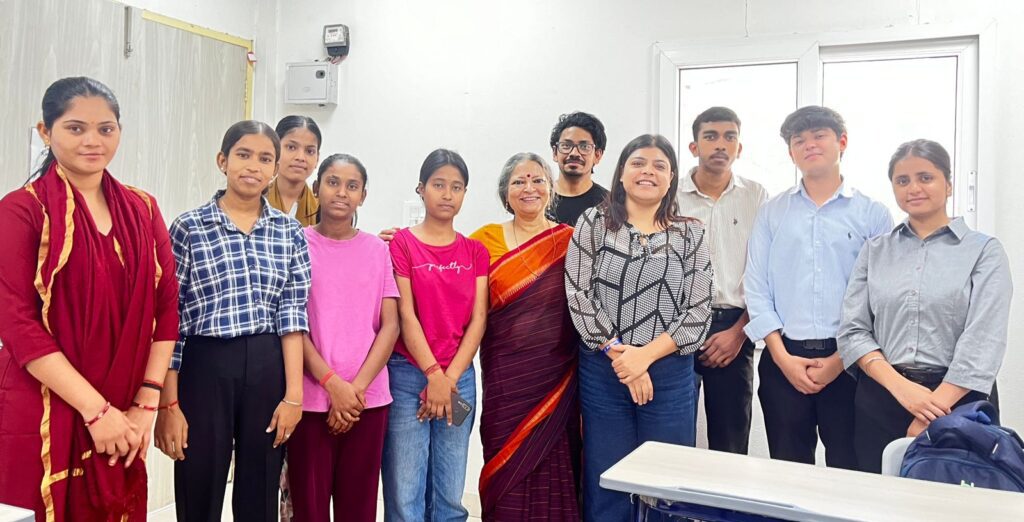
Young people from underserved communities frequently do not have access to these same invisible lessons. Their environments often look very different.
Here is what we see regularly in the lives of the youth we work with:
Constant financial stress and scarcity
When a family is struggling to pay rent or put food on the table, everyone in that household lives in low-grade anxiety. A nervous system on constant alert tips into anger far more quickly than one that feels safe.
Exposure to conflict and aggression
In overcrowded neighbourhoods, disputes between neighbours, domestic conflict at home, or street-level aggression are everyday realities. When a young person grows up watching adults resolve conflict through shouting, threats, or physical confrontation, which becomes their internal reference point. It is the only model they have seen so it is the one they unconsciously reach for.
No safe emotional space at home
When home is chaotic, when parents are overwhelmed, absent, or themselves struggling with unresolved anger, there is rarely a calm adult available to help a young person process what they feel. Emotions get stored, build up over years, and eventually they find a way out. Sometimes as an explosion at a workplace supervisor, sometimes as self-sabotage at the moment success feels close.
Discrimination and the weight of being overlooked
These youth carry a deep, simmering frustration that comes from years of being treated as ‘less-than’, by systems, institutions, and sometimes even by the people who were supposed to help them. This frustration is completely valid. But without tools to process it, it can show up as defensiveness, distrust, or anger in situations where those responses create problems rather than solutions.
This is not about blaming individuals or their families. It is about understanding context. When we understand the environment a young person has grown up in, we understand why these skills have to be actively taught. They cannot be assumed. They cannot be skipped. And they will not develop on their own.
What Unmanaged Anger Actually Costs a Young Person
When anger is not addressed, it does not disappear. It just changes shape.
- At work, it looks like difficulty taking feedback, conflicts that escalate quickly, and impulsive decisions, walking off the floor, refusing a task – that cost the job.
- In relationships, it pushes away the very people who might otherwise provide support, creating isolation at the moment a strong network matters most.
- In the body, chronic anger raises cortisol levels, disrupting sleep and concentration, making it genuinely harder to learn and perform.
- And in self-belief, every outburst leaves behind a quiet shame that hardens over time into a story: I cannot control myself. I am not cut out for this.
Studies show that 1 in 3 young employees lose their first job not due to poor performance, but due to interpersonal and behavioural issues. The technical skills were there. The emotional ones had simply never been taught.
ETASHA’s approach towards Mindset and Behavioural Change
ETASHA society prepares young people from underserved communities in Delhi and Haryana for dignified, sustainable employment. Our curriculum covers Vocational Skills, AI Skills, Interview Preparation, Financial Literacy, Communication Skills and Workplace Readiness. But from the very beginning, we recognised that none of that would matter if we did not also address what is happening inside.
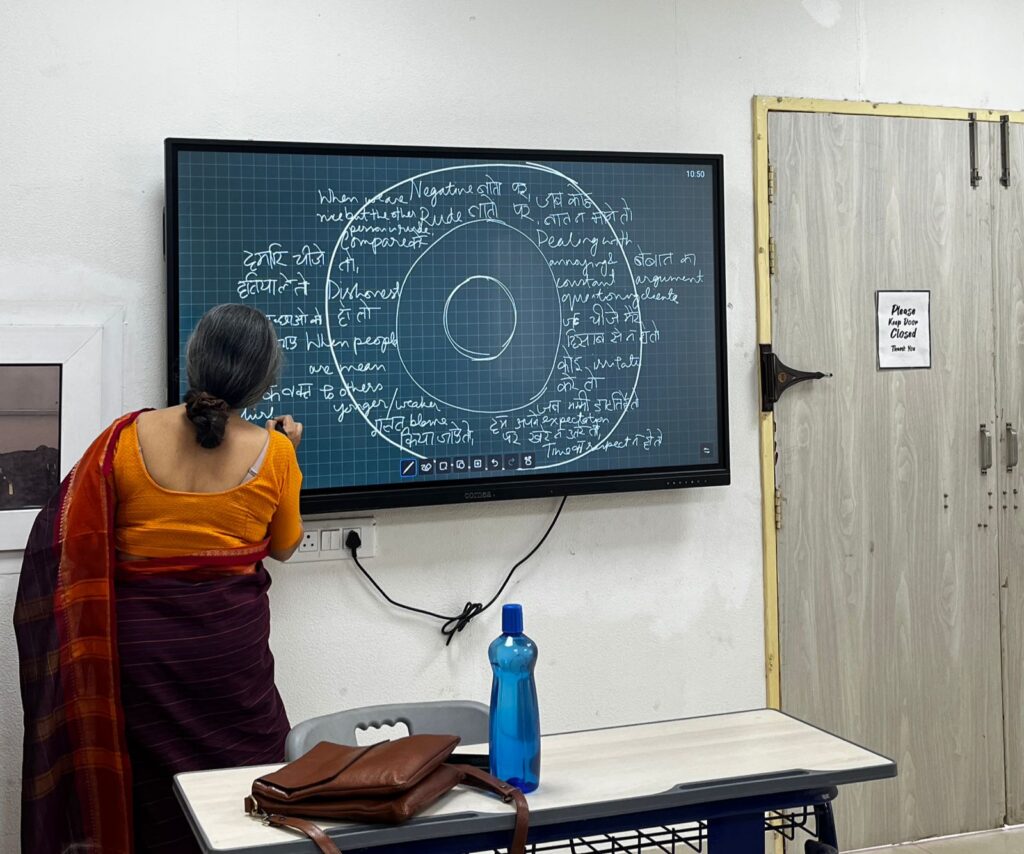
How Emotional Regulation Is Actually Built
Anger management is not one-size-fits-all, and it is not a single session or a poster on a wall. The most effective approaches combine several methods, practiced over time, in real-life contexts. Here is what the evidence and our own experience tells us works.
- Identifying personal triggers: Everyone has specific triggers, particular words, tones of voice, situations, or people that set off a strong reaction. The first step in managing anger is learning what yours are. Once you can name them, you can begin to see them coming. And once you see them coming, you have a tiny window to choose a different response.
- Breathing and grounding techniques: These are not soft or vague. They are physiological tools that interrupt the body’s anger response in real time. Slow, controlled breathing activates the parasympathetic nervous system and it literally calms the body down at a biological level. Practiced regularly, these techniques become instinctive. They become the thing you reach for automatically when a difficult situation arises.
- Building an emotional vocabulary: Research consistently shows that naming an emotion reduces its intensity. When we can say “I am feeling embarrassed right now” or “this feels like unfairness” rather than just registering a hot, overwhelming feeling, we gain just enough distance to think clearly. Many young people have only one word for the full range of difficult feelings: angry. Expanding that vocabulary is genuinely transformative.
- Role play and safe practice: Knowing something intellectually and being able to apply it under pressure are very different things. Practicing difficult conversations, receiving criticism from a supervisor, handling a conflict with a colleague, pushing back respectfully on an unfair instruction in a safe, supportive environment builds the muscle memory that shows up automatically in the real moment.
- Reframing how we interpret situations: A lot of anger comes from an interpretation that may or may not be accurate.
“My supervisor is disrespecting me.”
“They gave that opportunity to someone else because they don’t believe in me.”
Sometimes these interpretations are correct. But often, they are not the only possible reading of the situation. Learning to pause and ask ‘what else might be true here?’ and it is a skill that changes how a young person navigates the workplace.
Anger management is neither a soft skill nor a nice to have. It is a survival skill, a career skill, and ultimately a life skill. And for young people who have never been given the tools or the space to develop it, having someone walk that journey with them can change everything.
ETASHA’s Keh Daalo Helpline is a safe, confidential and judgement free space where you can talk openly about what you are feeling. Call us today on +91 9311897779.
To know more, partner with us, or volunteer, get in touch. We would love to hear from you.